
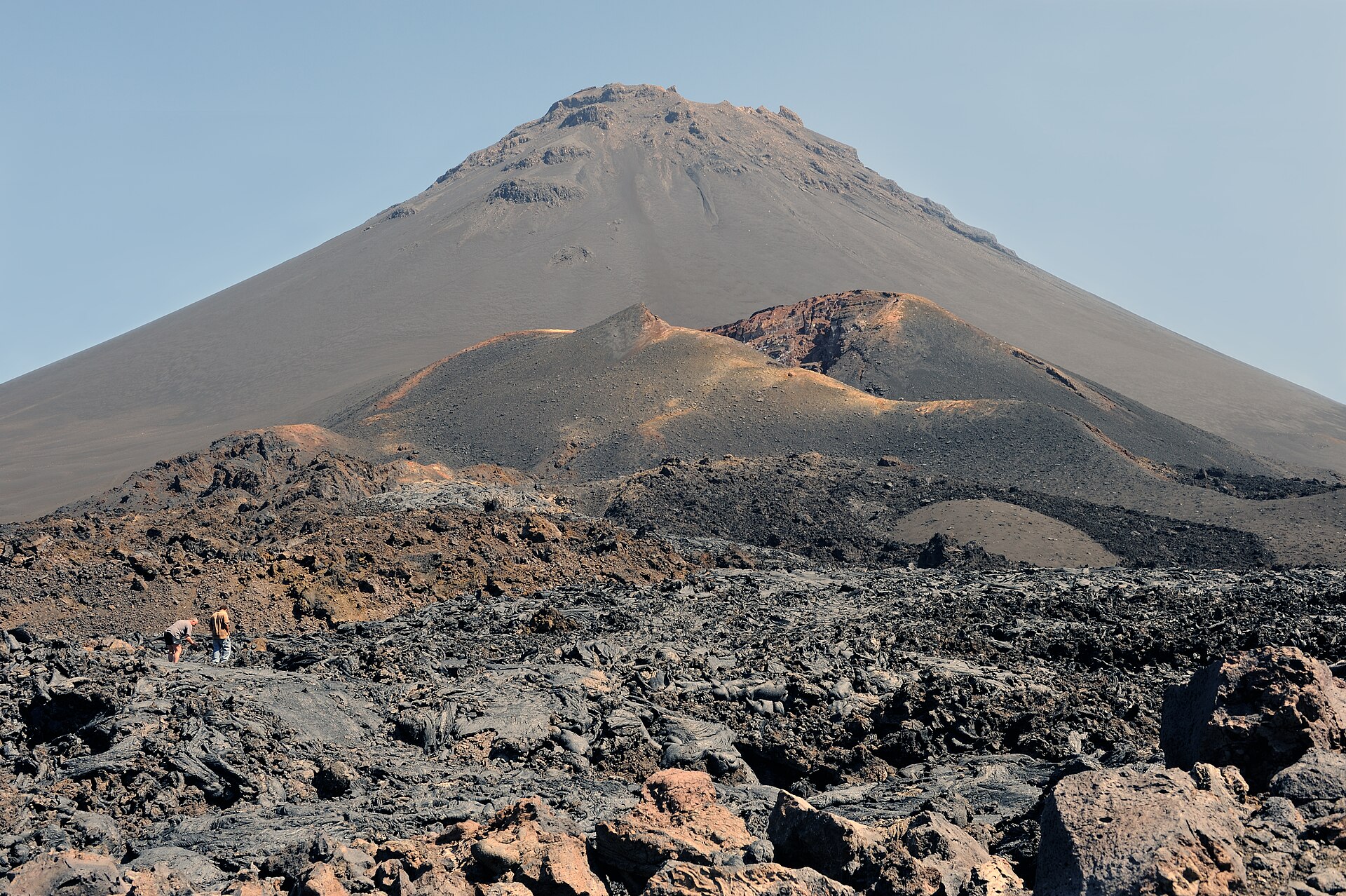
- Choose your island by the picture: Santo Antão for green ridges, Fogo for volcanic shapes, Boa Vista for beaches.
- Shoot at sunrise and sunset, when low light shows texture on slopes and sand.
- Start early at Cova, because clouds often cover the valley by late morning.
- Leave room for ferries and shared minivans, which wait until full.
- Sort out drone approval and any protected-area permit before you travel.
Contents
- Which island suits which kind of shot
- When to shoot for the landscape you want
- Working the light hour by hour
- Moving between islands and around each one
- Drone rules and paperwork for a commercial shoot
- Frequently Asked Questions
Cape Verde is a group of Atlantic islands, each with its own look. Green mountains, black lava and white sand lie a short ferry ride apart.
Choosing the island, month and hour is hard when you must travel between them. This guide shows which island fits which image, when the light works, and how to get around.
Which island suits which kind of shot
Santo Antão
Choose Santo Antão for its steep mountain ridges, deep gorges and terraced fields. The Paúl Valley is the place to shoot them, and the drier south has a harsher, volcanic look.
For the valley view, drive to the Cova crater rim. Go early, because cloud often builds by late morning and hides the valley.
Fogo
Fogo suits volcanic shapes: lava fields, steep slopes and villages around Chã das Caldeiras. Pico do Fogo, at 2,829 m, is the landmark to frame them against.
The summit walk starts in Chã das Caldeiras and climbs about 1,100 m. Allow 3–4 hours up and 2–3 hours down, since loose ash slows the descent.
Sal
Sal gives you beaches and open water on the same island. Santa Maria has wide sand and clear turquoise sea, so it suits bright, open frames.
For something more graphic, go to Pedra de Lume. Its salt pans sit inside a volcanic crater, and a wide frame shows the crater and its salt flats together.
Boa Vista
Boa Vista is the island for long sandy beaches, dunes and desert-like inland scenes.
Loggerhead turtles nest on its beaches from mid-June to the end of October. At night, don’t walk on nesting beaches without a licensed guide. Use no flash or white light, and don’t touch or crowd the turtles.
When to shoot for the landscape you want
For dry, sharp scenes of beaches, dunes and volcanoes, shoot outside the rainy season. It usually runs from August to October, with September the wettest month.
From January to June, Praia gets 6 to 9 hours of sun a day. That’s your best window for clear, strong light.
For green mountains, go to Santo Antão in October. That’s when the Paúl Valley is at its greenest, just after the rains. From November to March, it’s cooler and drier, which is easier for walking between shots.
Boa Vista’s turtle nesting runs from mid-June to October, peaking from mid-July to mid-September. Want turtles in your frame? Plan your Boa Vista days inside that window, since November falls after it.
Working the light hour by hour
Shoot at sunrise and sunset, when the low light rakes across beaches, dunes and volcanic slopes. Check local times for your shoot date.
Keep a spare morning for Santo Antão. Cloud often builds on the Cova crater rim by late morning, so start early.
On Sal, Buracona is best shot at midday. Around noon, the sun enters the sea cave and lights the water blue. That needs clear sunshine, so check the sky before you go.
Buracona is open daily from 09:00 to 18:00, so you have plenty of time around noon. Adults pay about €3, and children enter free.
Moving between islands and around each one
Between islands, you can fly or take the ferry. Mindelo and Porto Novo are linked by a one-hour crossing, with departures from Mindelo at 08:00 and 15:00.
CVsky’s winter flights run from 25 October 2026 to 27 March 2027, so confirm your route and day. Ferry times change by date, so leave room before any flight or timed shoot.
On each island, the aluguer is a shared minivan or pickup. It can wait until full, so leave early to reach a sunrise spot on time.
For a fixed schedule, take a taxi. Porto Novo to Tarrafal on Santo Antão costs about 7,000 CVE. Or rent a small Suzuki Jimny on Santo Antão, about 6,500 CVE per 24 hours.
Drone rules and paperwork for a commercial shoot
If you are Canadian, you need an ETA for tourism or business before you travel.
Complete EASE pre-registration and pay the 3,400 CVE international airport security fee at least five days before arrival. Do both well ahead, not the day before you fly.
Before you fly a drone, ask the Civil Aviation Agency for approval and the rules. Then check the rules for your exact flight area and planned height.
Flying near protected land or wildlife needs permission from the park or site first. For a commercial shoot, contact local authorities before filming and ask which permits cover the location and production.
Pick your island by the picture you want: green ridges on Santo Antão, volcanic shapes on Fogo, beaches on Boa Vista. Shoot at sunrise and sunset, when low light shows texture.
Next, pick one island and sort out drone approval and any permit before you travel. Build each day around the light and leave room for ferries.
Frequently Asked Questions
What currency do you need in Cape Verde?
You need the Cape Verdean escudo, abbreviated CVE. Use it on every island, and keep some on hand for small purchases.
Ferry baggage charges are listed in CVE, so weigh your bag before you reach the port and be ready to pay any extra in escudos.
Is Sal or Santiago the better base for a first photography trip?
For a first trip, pick Sal as your base. Beaches, sea caves and salt pans are all on the island, so you can shoot a varied set without taking a ferry.
Choose Santiago instead if you want Praia, Cidade Velha and rural landscapes.
Can you hire a car on Santo Antão?
Yes, you can hire a car on Santo Antão. With your own car, you set the timing: you can leave in the dark and reach a viewpoint before the cloud builds up.
Reserve it before you arrive, so you don’t lose your first morning waiting.
Do inter-island ferries accept camera gear as hand luggage?
Yes. CV Interilhas allows two hand-luggage items per passenger, and each item can weigh up to 8 kg and measure 55 × 40 × 25 cm. Anything bigger may be treated as checked baggage and charged extra, in CVE.
Related reading
- Beyond the Rule of Thirds: Balance, Weight and Negative Space
- Colour in Photography: Harmony, Contrast and Restraint
Photo: Cape Verde Pico do Fogo wide, by Cayambe, CC BY-SA 3.0 (Wikimedia Commons)