
The best compact camera for travel is the one that matches how you shoot and how much you will actually carry. Spec sheets make every model look capable, so the decision comes down to three trade-offs: sensor size, lens range, and the weight you are willing to carry all day.
- Fixed-lens APS-C cameras give the best image quality, while 1-inch zoom compacts give the most reach.
- Longer zoom ranges usually cost sharpness, so more reach is not automatically better.
- Compare the whole kit, camera plus lens, plus a spare battery and card, not just the body.
Which type of compact camera suits your travel style?
Compact travel cameras fall into three groups, and each one answers a different question about how you shoot.
Fixed-lens APS-C compacts
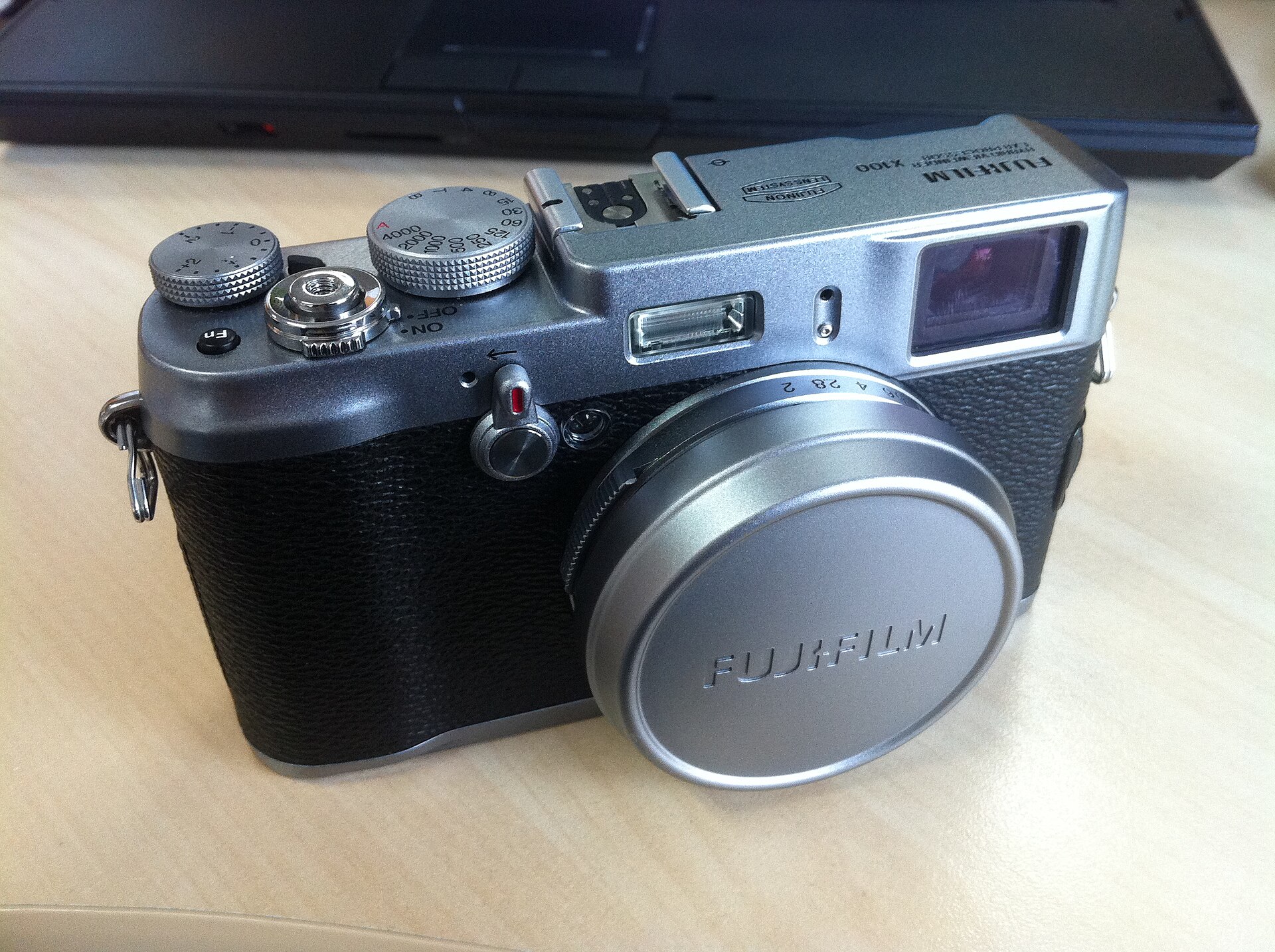
These pair a large sensor with a single prime lens. The Fujifilm X100VI is the clearest example: it has an APS-C sensor and a 23mm lens, which gives a field of view equivalent to 35mm on full frame. That focal length is wide enough for most scenes without distorting people. It suits street photography, family photos and general travel, where you walk close to your subject and prefer to move your feet rather than zoom.
The Ricoh GR IV sits in the same category but is built to be more pocketable. If you want a camera that disappears into a trouser pocket and is always with you, that matters more than any spec.
Travel zooms
A travel zoom, also called a superzoom compact, is a small fixed-lens camera with a high optical zoom ratio and a lens that retracts into the body. Wide-to-telephoto flexibility is the reason to buy one. The compromise is that the longest zoom lenses may not be the sharpest, so a moderate zoom range tends to give cleaner files than an extreme one.
Small mirrorless with a short zoom or pancake
An interchangeable-lens body gives you a larger sensor and the option to change lenses later, at the price of a bigger and more expensive kit. It makes sense if you expect your needs to grow, less so if you want something you can forget is in your bag.
Sensor size and lens range: what you gain and what you give up
Sensor size is the biggest single factor in image quality, particularly in dim light. A larger sensor collects more light, which helps when you shoot indoors, at dusk or in markets and streets after dark.
- APS-C fixed-lens cameras deliver the best quality in this class and pair it with a bright lens. That combination is useful for evening shooting and for blurring backgrounds when you photograph people.
- 1-inch sensor zoom compacts trade some of that quality for flexibility. A 1-inch sensor has a crop factor of 2.7, and the Sony RX100 VII, with an 8x zoom, is rated sharper than the 15x Panasonic ZS200, which shows how reach and quality pull against each other.
Ask yourself how often you genuinely need a telephoto. If most of your pictures are streets, buildings and people at conversational distance, a single sharp, bright lens will serve you better than a long zoom you rarely extend.
How much weight, battery and budget should you plan for?
Weight decides whether a camera goes out with you or stays in the hotel. The published figures show how quickly a kit grows once you add a lens. A fixed-lens Fujifilm X100VI comes to about 521g with battery and card, while a Canon EOS R50 with its 18-45mm kit lens is about 505g and a Sony A7C II with a 28-60mm lens is about 681g. These are manufacturer-based totals, so treat them as a comparison tool rather than a scale reading, and remember that straps, caps and extra accessories add more.
Notice that a small interchangeable-lens kit and a fixed-lens camera can weigh much the same. The difference is in what the weight buys you: a larger range of lenses in one case, a simpler and more compact body in the other.
Battery life is worth checking before you commit. The X100VI, for instance, is rated at roughly 450 shots per charge and charges over USB-C, which lets you top it up from a power bank. Buy a spare battery regardless of the rating, since cold weather and heavy use of the screen shorten it.
On price, compare the complete setup rather than the body alone. Budget for a memory card, a spare battery and a case. Used cameras can lower the cost: an older model such as the Ricoh GRIIIx is still considered worth buying at a good used price if you do not need the fastest autofocus.
How do you test a compact before a long trip?
Autofocus is where compact cameras differ most in daily use, and it is easy to check before you leave. Buy from a seller with a decent return window, then run a few realistic tests.
- Shoot a moving subject. Photograph people walking toward you or traffic passing, and count how many frames are sharp.
- Test in dim light. Go indoors or out at dusk and see whether the camera hunts for focus.
- Try the face and eye modes. If you photograph family or strangers, see whether the camera holds focus on a face while you concentrate on composition.
- Carry it for a full day. Wear it the way you would travel, then note whether you reached for it or left it in the bag.
- Check the files. Look at JPEGs straight from the camera, since good out-of-camera results save editing time on a long trip.
Also test the wireless transfer to your phone, which makes sharing pictures on the road much easier. If any of these steps frustrates you at home, it will frustrate you more on the road.
Frequently asked questions
Is a compact camera really better than a phone for travel?
A compact gives you a larger sensor and a real lens, which shows in low light, in skin tones and in large prints. A phone wins on convenience and sharing. If you plan to print your pictures or care about image quality, a dedicated camera is a clear step up.
Should you choose a fixed lens or a zoom?
Choose a fixed lens if you mostly shoot streets, people and general scenes, because you get better quality and a smaller body. Choose a zoom if you need to cover wide views and distant subjects with one camera, and accept that very long zoom ranges can cost some sharpness.
How many batteries should you take?
Take at least one spare. Small cameras use small batteries, and a long day of shooting, screen review and wireless transfer drains them faster than the rated figure suggests. A camera that charges over USB-C can be topped up from a power bank.
Is a used compact camera a safe buy?
It can be, especially for models that have been out for a few years. Check the shutter count where possible, test the autofocus and the lens for dust or scratches, and buy from a seller who accepts returns.
Related reading
- Buying Used Camera Gear Without Getting Burned
- Full Frame, APS-C or Micro Four Thirds: Sensor Size Honestly Compared
Sources
- Best Compact Cameras for Travel Photography (2026) (thecotswoldphotographer.com, accessed 2026-11-02)
- Best Travel Cameras for 2026: A Photographer’s Guide (awaylands.com, accessed 2026-11-02)
- List of superzoom compact cameras — Wikipédia (en.wikipedia.org, accessed 2026-11-02)
Photo: Fujifilm X100 (5758095920), by bfishadow from Beijing, China, CC BY 2.0 (Wikimedia Commons)