
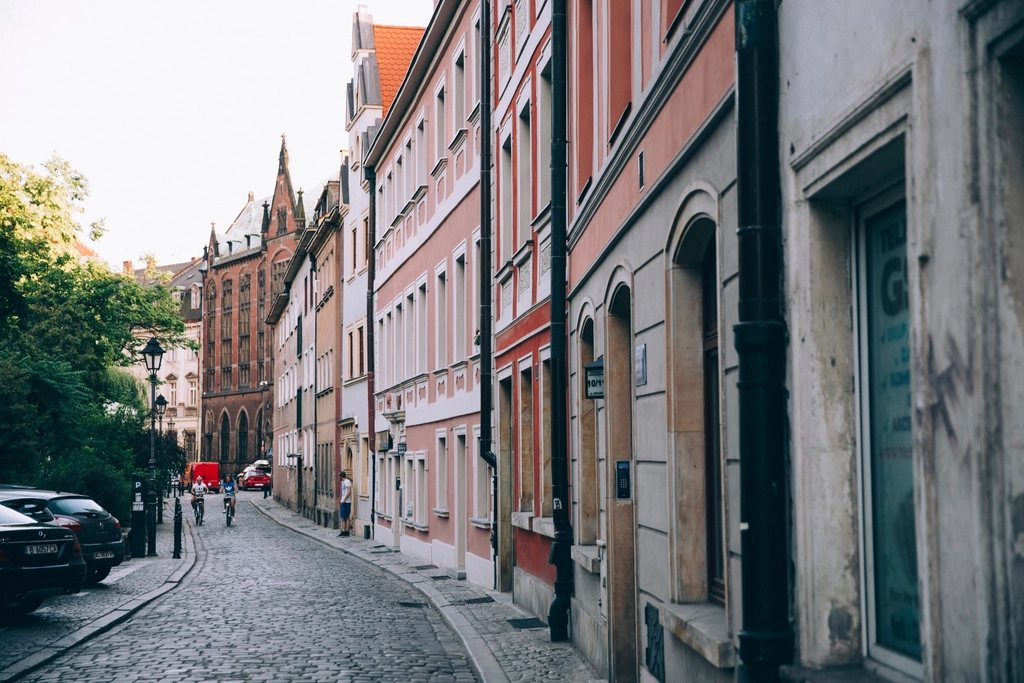
Street photography is the genre most of us want to try and the one most of us abandon first. The camera is light, the subject matter is everywhere, and nothing stops you except your own nerves. We have all stood on a corner with the camera at our hip, watching a perfect scene unfold and doing nothing about it. This article is about getting past that, about behaving well while you do it, and about understanding the general legal picture without pretending to be lawyers.
Why the nerves are worth taking seriously
The fear of photographing strangers is not irrational. Pointing a camera at someone is a small social act, and most of us were raised to avoid attention. The good news is that the discomfort fades with repetition, and the bad news is that there is no shortcut. What helps is starting small. Photograph markets, festivals and busy waterfronts, where cameras are expected and nobody looks twice. Photograph the backs of people, silhouettes and hands before you photograph faces. Confidence is built in increments, not in a single brave afternoon.
It also helps to decide, before you leave the house, what you are actually looking for. A vague wish to “shoot street” produces vague pictures and lots of hesitation. A narrow brief, such as red umbrellas, reflections in shop windows or people carrying awkward objects, gives you a reason to raise the camera. The brief is a tool for your nerves, not a rule; the best frame of the day is usually the one that ignores it.
Etiquette that works in practice
Our working rule is simple: photograph people as you would want to be photographed. That means no sneering pictures of people at their worst, no chasing anyone who has clearly declined, and no lingering on children without a parent’s nod. It does not mean asking permission for every frame. Candid photography depends on the unposed moment, and a request destroys it. The compromise most of us settle on is to shoot first, and then to be open and friendly if anyone notices.
When someone does ask what you are doing, tell them. A short honest answer, such as “I photograph the city, I liked the light on this corner”, disarms nearly everyone. Offer to show the picture on the back of the camera. Offer to delete it if they mind, and then actually do so. In years of shooting, we have had far more conversations that ended in a handshake than in an argument, and almost all of the arguments began because a photographer got defensive.
The law, described in general terms
We are photographers, not lawyers, and the rules differ from country to country and sometimes from city to city. What follows is a general sketch, and you should check the position where you live and where you travel. In many places, photographing people in a public space is lawful, on the principle that there is no reasonable expectation of privacy on a public street. Publishing those photographs is often lawful too, for editorial or artistic purposes, but commercial use such as advertising usually requires a signed release.
Some jurisdictions treat a recognisable image of a person as personal data or as part of their personality rights, which can restrict publication even when the act of photographing was fine. Private property that is open to the public, such as shopping centres, stations and museums, is a grey area: the owner can set its own rules and ask you to stop or leave. Sensitive sites, such as military installations and some infrastructure, may be off limits altogether. And harassment laws apply to photographers like everyone else: if your behaviour would be intimidating without a camera, the camera does not excuse it.
Dealing with security staff and police
Sooner or later someone in a uniform will approach you. Stay calm, stay polite and keep the camera down while you talk. Ask what the concern is. In our experience, most encounters end quickly once it is clear you are not a threat, and a smile does more than a speech about your rights. If you are on genuinely public land and the law where you are permits photography, you can say so, calmly. If you are on private property, the owner’s representative can ask you to leave, and it is rarely worth arguing.
Know in advance whether officials where you are may lawfully demand to see or delete your images. In many places they cannot without a legal order, but insisting on that point in the heat of the moment is a decision for you to make based on the situation, not on an article. Deleting a frame costs you a picture; escalating costs you an afternoon.
Gear and settings that keep you moving
Street photography rewards small cameras and simple settings. A fixed 28mm or 35mm equivalent lens forces you to get close, which is where the pictures are. Many of us set the camera to aperture priority at f/8, auto ISO with a minimum shutter speed of 1/250 second, and zone focus at around two metres. With those settings, the camera is ready before you are, and you can concentrate on where to stand rather than what to dial in.
- Set a minimum shutter speed so movement stays sharp in low light.
- Turn off the shutter sound and any autofocus assist lamp.
- Use a wrist strap rather than a neck strap; it reads as casual.
- Carry a spare battery and a small card wallet, nothing else.
- Wear comfortable shoes; a good street day is ten kilometres of walking.
Building a body of work
A single good street photograph is luck. A series is craft. Once your nerves settle, start thinking about what your pictures have in common, and go back to the same neighbourhoods at different times of day and in different weather. Rain, dusk and winter light produce far more interesting frames than a bright afternoon. Edit ruthlessly: of a thousand frames from a good month, a dozen might be worth keeping and one might be worth printing.
The final thing we would say is that the anxiety never entirely disappears, and that is fine. The slight edge of nerves keeps you attentive and keeps you respectful. The photographers we admire most are not the boldest ones; they are the ones who noticed something and cared enough to make the picture, then walked on without leaving anyone worse off for the encounter.