
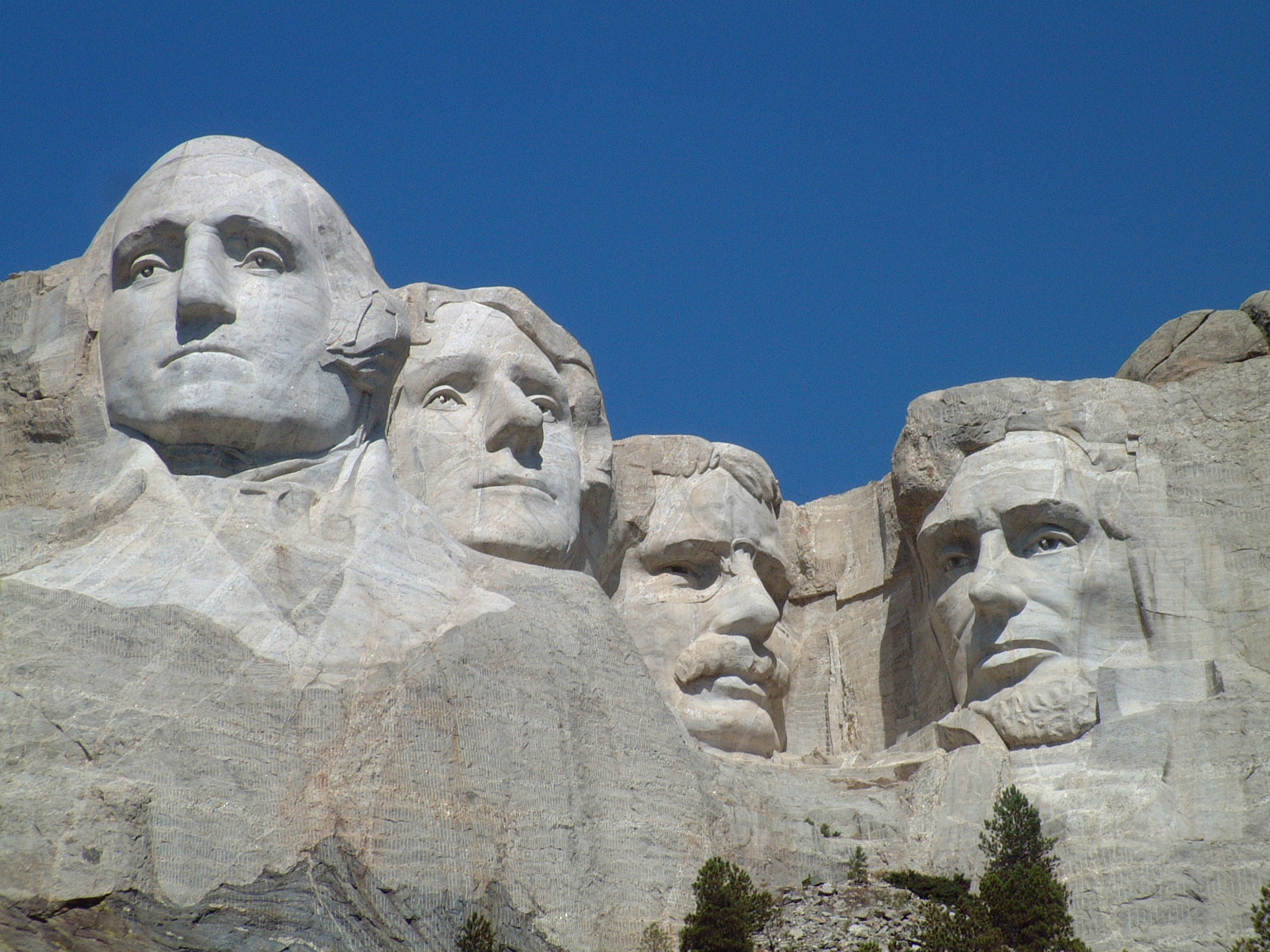
Searching for Mount Rushmore images usually means one of two things: you want reference pictures before a trip, or you need to decide how to shoot the memorial yourself. This guide covers both, using what is known about the mountain’s orientation, its scale and the way stock photographers tend to frame it.
- The carved faces look southeast, so the quality of light depends heavily on the time of day.
- Stock libraries are full of near-identical frontal shots, which makes a distinctive angle worth planning for.
- Context, such as pines, sky and the surrounding Black Hills, separates a record shot from a photograph.
What does the mountain actually look like, and why does it matter for your photos?
The memorial is a granite sculpture in the Black Hills of South Dakota, about 2 mi (3 km) southwest of Keystone. It shows four presidents: Washington, Jefferson, Theodore Roosevelt and Lincoln. Each head is 60 feet (18 m) tall, which is large enough to read clearly from a distance but small enough in a wide frame that you must decide early whether the faces or the landscape are your subject.
Only Washington’s figure includes any detail below chin level. The others end at the chin, so the lower part of the mountain is rough rock. That matters for composition: a tight crop on the faces gives you clean shapes, while a wider frame brings in raw granite and the slope below.
The sculptor chose this peak partly for its southeast-facing direction and maximum exposure to sunlight. For you, that is the single most useful planning fact. The faces catch direct light for a long stretch of the day, and the same orientation tells you roughly where the sun will sit relative to your lens.
What do stock images of Mount Rushmore show, and what can you learn from them?
Browsing a large stock library is a quick way to see what the market already contains.
- The four faces centred under a clear blue sky, often described simply as the monument against open sky.
- Low-angle views looking up at the rock, sometimes with cloud behind.
- The granite carvings rising above pines, which adds foreground and a sense of place.
- Vertical crops that stress height and the mountain’s mass.
- Event-driven pictures, such as fireworks behind the mountain or crowds in patriotic clothing during national holidays.
The lesson is practical. If your goal is a reference or a record, the centred blue-sky frame is easy to repeat and you will get it without effort. If your goal is a photograph someone remembers, the less common angles are where you have room to work.
How do you choose your angle and timing?
Start with the light. Flat midday light can erase the relief of the carving, so consider how shadows fall across the nose, brow and chin before you commit to a time. Check the sun’s position on a map or planning tool at home rather than guessing on site.
Frames worth trying
- Wide with pines. Use the trees as a dark foreground layer so the pale granite stands out.
- Low angle with sky. Tilt up and let cloud add texture, keeping the horizon straight so the faces do not look distorted.
- Tight crop. A longer lens isolates the faces and strips out the clutter around them.
- Vertical. Useful when the sky is dramatic and you want to include it.
Exposure and weather
Pale rock against bright sky can fool a meter. Check your histogram and be ready to expose for the stone rather than the sky. Haze, cloud and changing weather can give you something quite different from the clear-sky pictures that dominate libraries, and overcast light reduces harsh shadow across the faces.
How do you photograph the memorial responsibly and add meaning?
The memorial sits on land that was taken from the Sioux Nation in the 1870s. The Lakota know the Black Hills as Pahá Sápa and regard the region as sacred, and the mountain itself was known to them as Six Grandfathers Mountain. Sioux Nation of Indians awarded compensation that the tribe has refused, and the dispute over the land continues.
That history is relevant to your pictures if you plan to publish them with captions or an essay. A caption that names the place accurately, and acknowledges that it carries more than one meaning, is stronger than a generic label. It also gives a photo essay a thread beyond the carved faces.
On the practical side, be considerate of other visitors when you set up, avoid blocking viewpoints with a tripod during busy periods, and follow any posted rules about equipment. If you intend to use images commercially, remember that licensing applies to the pictures you buy or sell, so read the terms of any library before you download.
Frequently asked questions
What is the best time of day for Mount Rushmore images?
The sculpture faces southeast and was chosen partly for its sunlight exposure, so the faces receive direct light for much of the day. Plan around where shadows fall on the features rather than relying on a single clock time, and check the sun’s position before you go.
How large are the faces on Mount Rushmore?
Each of the four heads is 60 feet (18 m) tall. In a wide shot they can look small against the mountain, so decide whether you want the faces or the landscape to lead the frame.
Should I buy stock photos or shoot my own?
Stock libraries hold thousands of pictures, but many repeat the same centred, blue-sky composition. Shooting your own lets you choose light, angle and context, and gives you an image that is distinctly yours.
Why is Mount Rushmore a sensitive subject?
The memorial stands on land taken from the Sioux Nation in the 1870s, and the Lakota consider the Black Hills sacred. Accurate captions that acknowledge this history make your work more informed.
Related reading
- Beyond the Rule of Thirds: Balance, Weight and Negative Space
- Bad Weather, Good Pictures: Fog, Rain and Snow
Sources
- Mount Rushmore — Wikipédia (en.wikipedia.org, accessed 2026-11-24)
Photo: Mount Rushmore National Memorial, by Jim Bowen from Hope Mills NC, US, CC BY 2.0 (Wikimedia, via Openverse)